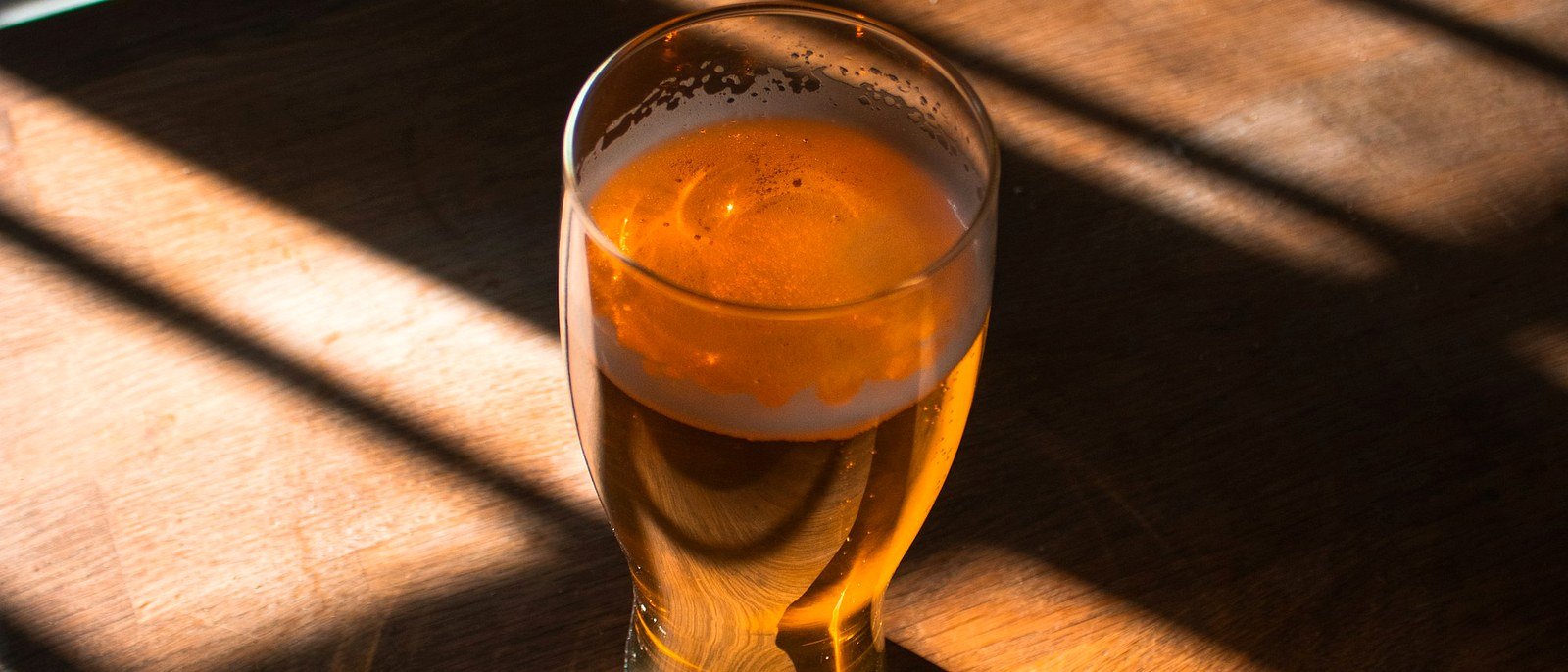
I'll start with a confession: I too sometimes crack open whatever's around when I get home from the brewery. But tasting my own beers at 5pm in the blazing heat, I eventually understood that a summer aperitif beer is something you choose. And there aren't thirty criteria, there are three.
1. Look for the dry finish, not the low ABV
Everyone looks at the alcohol content. That's a mistake. Two beers at 5% can have completely opposite effects, and what makes the difference is the sugar left in it once the yeast has finished its job.
A well-fermented beer finishes dry: the taste stops sharply, the mouth is clean, and you want another sip. A beer that keeps its sugar leaves a little film on the tongue — pleasant on the first glass, heavy on the second. That's exactly what we try to control when brewing a summer beer: a finish that cuts and calls for the next one.
How do you spot it without being a brewer? Ask your bottle shop for a dry beer, and judge three seconds after the sip: if your mouth is clean, you're good; if there's still a sugary veil, save it for the evening.
On alcohol, let's say the comfortable zone is 4 to 5%. Beyond that, the alcohol brings body and a sensation of warmth — great at 10pm, questionable in the sun.
2. It really has to fizz
It's the parameter nobody looks at and the one that changes everything. The gas doesn't just make bubbles: it brings a tingle, a little acidity, and it cleans the palate between sips. A flat beer, even a technically flawless one, sits in your stomach.
So if you're torn between two cans: take the livelier one. Pils, lager, witbier, session IPA — those styles are carbonated for it, and you'll find them in the shop.
What I keep for the end of the evening, though: roasty stout, resinous double IPA, 8% Belgian. Excellent beers, but dense, sweeter, often less fizzy. Drunk at 3pm they knock you out; drunk at 10pm as it cools down, they're perfect. A question of context, not quality.
3. Take it out of the fridge three minutes before
The most common mistake, and the easiest to fix. A beer at 2°C, you taste nothing: the cold blocks the aromas, they stay in the liquid instead of rising to the nose. You're drinking something cold, full stop.
Aim for 5 to 7°C. Take the can out three minutes before, pour it into a glass rather than drinking from the top, and you get back the taste of every ingredient we put in it. It's free and it completely changes the beer.
Bonus: why the can
A little thing I find fascinating. Under the sun, light breaks apart some of the hop molecules and forms a new one whose smell is foul. That's not a figure of speech, it's chemistry. In a green or clear bottle, a few minutes of full sun are enough to wreck the beer.
In a can, nothing happens. Zero light, zero oxygen, it cools fast and slips into the cooler without any fuss. It's not a marketing choice, it's simply the best packaging there is, and we fully own that choice.
In short
Dry finish, properly fizzy, served neither icy nor warm. The rest — the terrace, your mates, the sun going down slowly — you've already got that handled. And if you want to compare it all on tap, come taste at the taproom.
◢ No comments on the journal. React on Instagram.