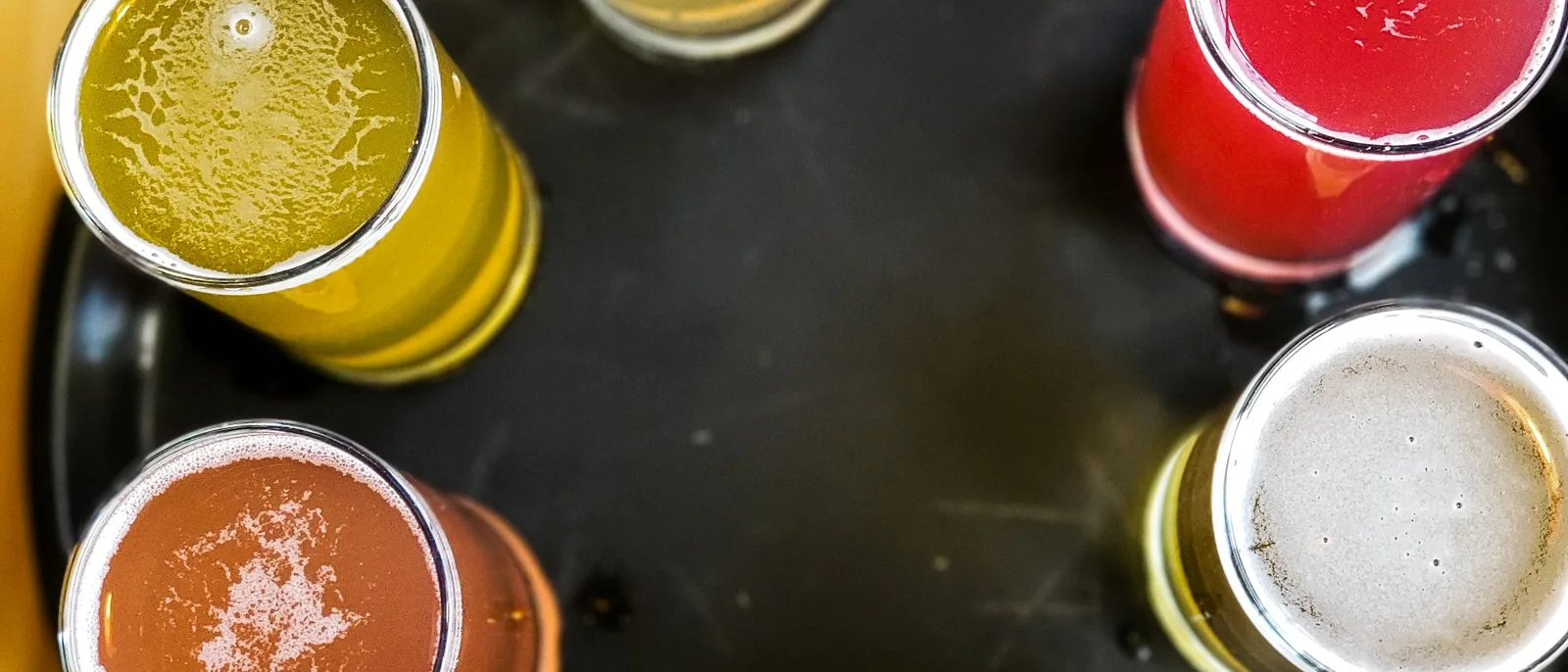
The word 'sour' makes people hesitate; 'fruit beer' makes them taste. Behind it: three families of styles, an acidity made by living things, and even a method to brew one at home.
BY THÉO LAFON
Brasseur & fondateur
A raspberry beer that smells of fruit from a metre away and that, on the palate, is nothing like a sweet drink. It's the acidity that does that, and that's the whole point of this article.
When I introduce a sour, I always say the word, and I almost immediately add 'fruit beer'. The first makes people hesitate, the second makes them taste. It's a bit of a shortcut on my part, but it rests on something true: what brings out a fruit isn't the sugar, it's the acidity. Lemon juice on strawberries, lime on a mango, it's the same principle. Sugar flattens the fruit, acidity wakes it up. So here's what's behind it all: the styles, the way we make that acidity, and how to reproduce it in your garage.
Look at the style, not the word 'sour'
Calling a beer sour is about as precise as calling a wine red. Behind the word are beers that have almost nothing in common.
The gose comes from Germany: light, salty, often laced with coriander. The salt rounds off the acidity and leaves a saline finish that makes you thirsty, which makes it a thirst-quenching machine in the blazing heat. The Berliner Weisse is lighter still, with an acidity that pinches the sides of your tongue and vanishes at once: the body is so thin it borders on flavoured water, in the best sense. The gueuze is Belgian, dry, complex, with no added fruit, a very fine bead and a finish that stretches long on the palate. It's closer to a farmhouse cider or a white wine than to a classic beer.
Fruit sours play on a constant mismatch: the nose announces raspberry or mango, your brain braces for sweet, and the mouth arrives dry. The first sip surprises, the second makes you understand why, and by the third the can is already half empty. And the pastry sour goes even further into the fruit: vanilla, lactose, fruit purée, a thick texture that coats the palate, with just enough acidity to keep it from ever becoming cloying. It's by far the easiest to introduce, the one you hand to someone looking for a fruity, indulgent beer.
The useful reflex: when a sour wins you over, remember the style, not the brewery. You'll find the same sensation elsewhere.
The acidity is made on site, by living things
What the whole family has in common is the mechanism. Lactic bacteria, the same ones as in yoghurt or sourdough, turn sugar into lactic acid. Nothing is added at the end. And that's also why these beers make you salivate: the acidity triggers a reflex, the mouth cleans itself between two sips, and you want to go back for more.
What changes everything is when and where you let those bacteria work. Three schools, three sensations.
Souring before the boil: clean and precise
The most widespread method today, and the one we use at La Fondation. We let the bacteria acidify the grain for a day or two, then bring the whole thing to a boil, which stops their work dead. Brewing then resumes as usual.
Because nothing else has time to happen, the result is clean and predictable. We know where we're going, we get the same acidity from batch to batch, and the fruit comes through without being disturbed. In our view, that's what gives the most satisfying results on fruit beers. The vast majority of goses, Berliners and modern fruit sours come from here.
That's exactly how Groove is in the Fruit was born, our kettle sour with blood orange and passion fruit: lively, frankly tart, with no bitterness and a dry, thirst-quenching finish. It's in the shop right now.
On the palate: the acidity strikes immediately, sharp, almost cutting, then fades in three or four seconds. It leaves no trace, just a fresh mouth and the urge for another sip.
Souring in the fermenter: rounder, less certain
Here, there's no boil to stop everything. The bacteria work at the same time as the yeast, in the same tank, and sometimes carry on for weeks afterwards. The acidity settles in gradually instead of being locked in all at once.
The brewer gains depth, but no longer controls much. The acidity can run further than expected, and from one batch to the next it's never quite the same beer. It's a fascinating way of working, but one that means accepting you won't master the result.
On the palate: nothing on the attack, then the acidity rises in the middle, spreads across the whole tongue, and is still there after you've swallowed. Less biting than the previous one, longer, sometimes less precise.
Wild yeast: the peak of the genre
The third tool is called Brettanomyces, or Brett in the jargon. It's a wild yeast, not a bacterium, and its role isn't to acidify but to add complexity. No one does it better on that front. Very slow, it picks up what the classic yeast left behind and makes aromas no other process can produce. Leather, hay, ripe apple, that famous funk you won't find anywhere else in the beer world.
It often ages in barrels, over months or even years, alongside the bacteria. This is the territory of gueuzes and great cellar beers, the most complex and sought-after we know how to make. The Rolls-Royce of the genre, and the price goes with it.
On the palate: it all starts with a huge nose, then the palate follows with a magnificent dryness that immediately calls for the next sip, and a finish that stretches on for a very long time. On the oldest ones, a hint of cider vinegar shows up, and that's exactly what enthusiasts come looking for.
Bonus: try a kettle sour at home
For those who brew at home, it's the most accessible of the three methods. Three conditions.
Acidify your wort before pitching, to around 4.5, with lactic acid or acidulated malt. That's what stops unwanted bacteria from taking over, and skipping this step costs you a rancid-butter smell that's impossible to fix.
Zero hops before souring. Hops are antibacterial, that's even the historic reason for their presence in beer: they'd block your lactic bacteria. You hop after the boil.
Pitch with commercial lactic cultures, the kind sold for making yoghurt at home. One sachet is enough, it's clean, dosed, and far more consistent than a pot of yoghurt. Then you drive out the air: sealed tank, cling film laid flat on the surface. You hold between 35 and 40 °C for twenty-four to forty-eight hours, taste regularly, and when the acidity suits you, fifteen minutes of boiling locks the result in.
In short
Style, timing, patience. And if you remember just one thing: on fruit, it's the acidity that does the work, not the sugar.